Mandate and context
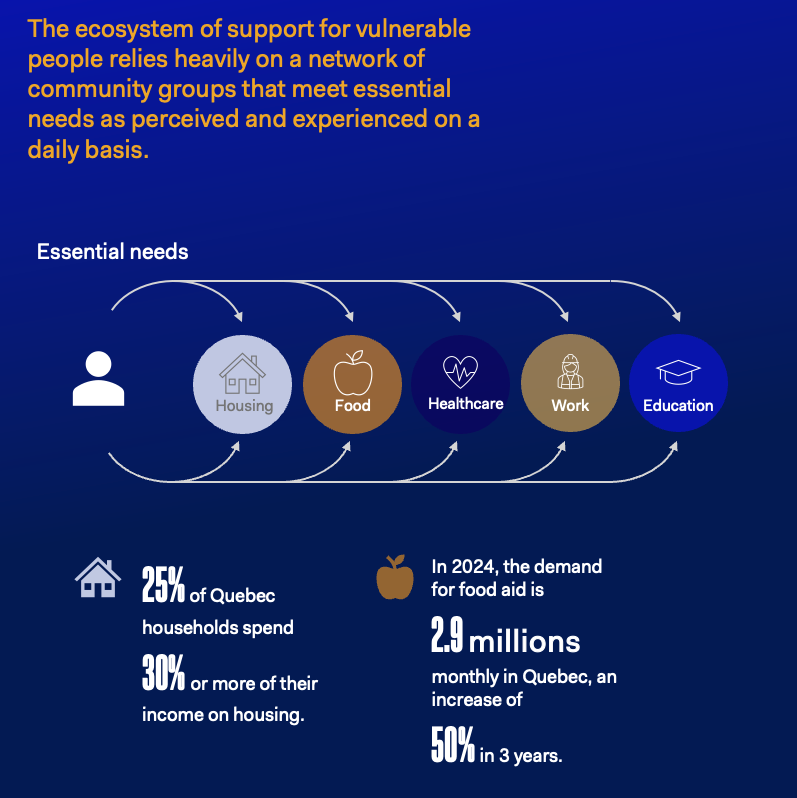
Against the backdrop of climate change and the energy transition, Hydro-Québec seeks to support vulnerable households by helping them adopt no-cost energy-efficiency measures—heat pumps, insulation, smart thermostats, and more. Although the utility is known for its compassionate approach toward its most vulnerable customers, its efforts remain largely reactive and now show their limits given the scale of demand. The mandate therefore is to design a proactive engagement strategy rooted in community trust and the mobilization of local partners.
Implementation and solutions
To meet this challenge, VOLUME10 first conducted an international benchmark of the most effective energy-poverty programs across North America, Europe, and Oceania, pinpointing the mechanisms that best drive enrolment and sustained participation. In parallel, more than thirty interviews with experts, academics, community organizations, and municipalities mapped the “trust ecosystem” and identified the behavioral levers most likely to encourage adoption. These insights then framed a series of co-creation workshops in which the levers were tailored to Hydro-Québec’s specific context.
Impact and outcomes
The engagement strategy transforms a social ambition into an operational program: a human-centred, community-trust-based approach designed to identify, mobilize, and proactively support vulnerable households through the energy transition. More than a standalone efficiency initiative, the program amplifies Hydro-Québec’s mission and helps build a future that is sustainable, equitable, and shared by all.